


 Chinese
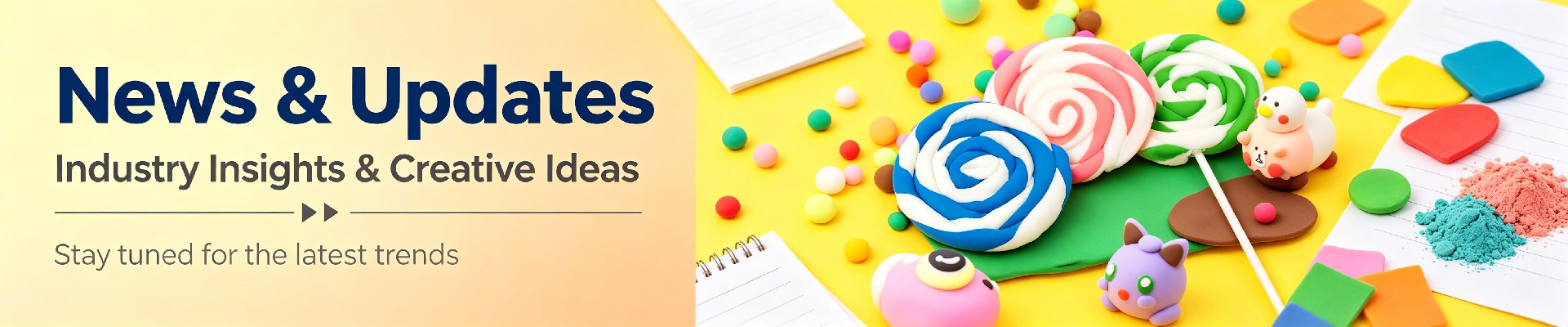
When parents choose toys for their children, safety is always the top priority. Kids ultra-light clay, as a widely popular craft material, directly impacts children's health through its safety and quality. This article explores how kids ultra-light clay manufacturers fulfill their dual commitment to "safety and creativity" from the perspectives of safety standards, raw material selection, and product certifications.
Safety Standards: From Industry Regulations to Corporate Commitment
Ultra-light clay toys are loved by children for their bright colors, strong plasticity, and ease of use, often used to develop children's hands-on abilities and creativity. However, these toys often contain adhesives, pigments, and other ingredients that — if selected or used improperly — may pose health risks.
For this reason, leading kids ultra-light clay manufacturers in China have established rigorous safety standard systems. Dr. Love Toys explicitly states that safety is the foundation of its business: "Children are the future of our nation, and nothing concerning children is trivial." Its products have passed both China's 3C certification and EU EN71 safety standards, with strict controls from raw materials to production processes.
Lofu has made a significant breakthrough in addressing the safety concerns associated with traditional ultra-light clay that uses boric acid or borax as crosslinking agents. In 2020, the company successfully developed a boron-free ultra-light clay and obtained a national invention patent, making Lofu one of the first ultra-light clay brands in China to pass EU EN71, South Korean KC, and US ASTM safety tests.
Raw Material Innovation: From Import Dependence to Self-Sufficiency
The core raw materials of kids ultra-light clay are key determinants of product safety and performance. In the past, China ultra-light clay manufacturers were entirely dependent on imports for the key raw material — foaming powder — resulting in high costs and an unreliable supply chain.
To solve this bottleneck, leading companies invested significant resources in independent R&D. Lofu spent years overcoming the technical challenges of foaming microspheres, with the core difficulty being precise control of foaming volume and material temperature. This technology filled a domestic gap and received verification from the Henan Provincial Scientific and Technological Information Research Institute, as well as a national invention patent.
In material selection, companies are increasingly focusing on new material development. Dr. Love has developed eco-friendly products using natural materials such as wheat clay and rice clay, aligning with the consumer trend of "back to nature." The company has also launched antibacterial clay that reduces the risk of bacterial growth through antibacterial technology, further protecting children's health.
Quality Assurance: Full-Process Control from Production to Shipment
Kids ultra-light clay manufacturers demonstrate their commitment to product quality at every stage — from raw material procurement to finished product shipment.
In production environments, leading companies have established high-standard workshops. Makeno New Material Technology (Linyi) Co., Ltd. implements 6S production site management to ensure clean and standardized production environments. Lofu not only has its own testing laboratories and design studios but also established the Henan Provincial Polymer Ultra-Light Clay Engineering Technology Research Center, covering new product development and research on new equipment, technologies, and formulations.
In production equipment, automation and intelligence have become industry trends. Dr. Love introduced automated production lines as early as 2010, and its ultra-light clay automated production line went into operation in 2018. Lofu's new Phase II intelligent factory has achieved integrated operations across mold development, raw material processing, product manufacturing, sorting, and packaging.
Consumer Buying Guide
For parents looking to purchase safe ultra-light clay for their children, industry experts offer the following recommendations:
Choose reputable channels: Prioritize products sold in shopping malls, supermarkets, brand专卖店, or reputable e-commerce platforms, and keep purchase receipts.
Check labels and markings: Look for product name, manufacturer information, applicable standards (such as GB 6675 "Toy Safety" series standards), main material composition, warning instructions, etc. Avoid products with missing manufacturer information.
Verify safety certifications: Quality products will display certification information such as China's 3C certification or EU EN71 safety standards. Consumers can verify certificate authenticity through the National Certification and Accreditation Information Public Service Platform.
Choose age-appropriate products: Confirm that the indicated age range matches the user's age. Young children (under 3 years) face high choking hazards and should not play with clay containing small parts or easily detachable components.
Check odor and color: Products with obvious odors, pungent smells, or overly bright colors may contain excessive heavy metals or irritating chemical fragrances and are not recommended.